
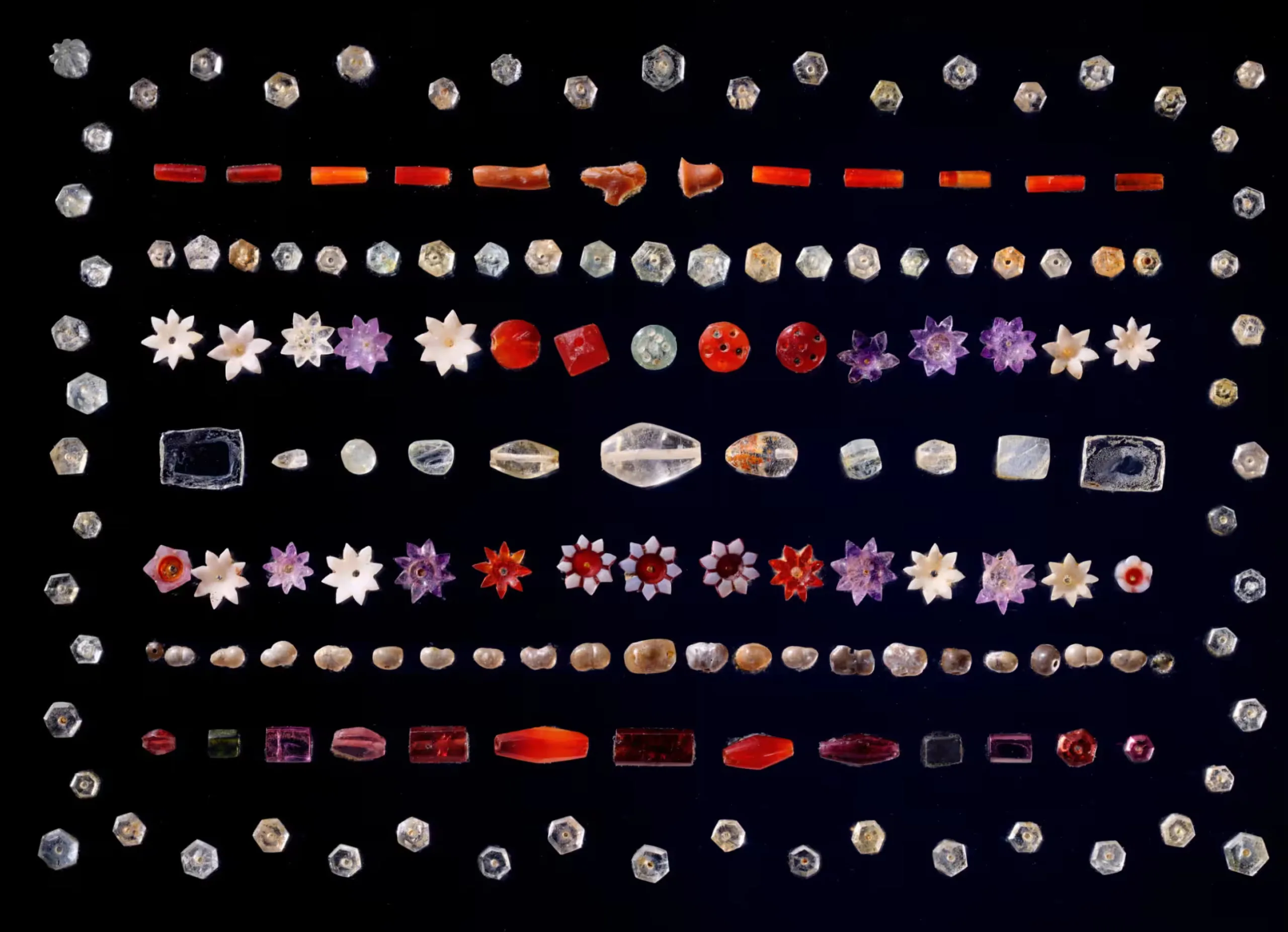
Buddhist scholars and monastic authorities have voiced strong criticism of the forthcoming auction in Hong Kong of ancient Indian gem relics that are widely believed to contain the presence of the Buddha. Scheduled for next week at Sotheby’s, the sale catalogue describes the Piprahwa gems as having ‘unparalleled religious, archaeological and historical importance’.
Many in the Buddhist community regard these objects not merely as decorative stones but as sacred relics, desecrated by a British colonial landowner upon their excavation.
Professor Ashley Thompson of SOAS, University of London, and Conan Cheong, curator and specialist in Southeast Asian art, have both raised ethical objections to the auction. They argue that these treasures were illicitly acquired during the colonial period and that their sale contravenes modern standards of cultural and spiritual stewardship.
The collection is estimated to fetch around HK\$100 million (approximately £9.7 million) and is being offered by three descendants of the British engineer William Claxton Peppé. In 1898, Peppé unearthed the gems on his estate in northern India. The hoard comprises worked and natural specimens of amethyst, coral, garnet, pearl, rock crystal, shell and gold, fashioned into beads, pendants and various ornaments.
Historical records indicate that the Piprahwa gems were originally interred within a domed funerary monument—a stupa—in Piprahwa, in present-day Uttar Pradesh, India, between 240 and 200 BC. Contemporary accounts assert that they were deposited alongside fragments of the Buddha’s cremated remains, which date to approximately 480 BC.
Under the terms of the 1878 Indian Treasure Trove Act, the British Crown appropriated Peppé’s discovery. The human remains and ashes were subsequently presented to King Chulalongkorn of Siam, while the majority of the gemstones were retained by the colonial museum in Kolkata. Peppé was permitted to keep roughly one-fifth of the precious fragments.
Professor Thompson observed, “For devotees, these gem relics are not inert artefacts; they are suffused with the Buddha’s presence. To separate the stones from the accompanying bone and ash perpetuates the violence inherent in colonial appropriation and disregards the original intent of permanent unity.”
Venerable Dr Yon Seng Yeath, Abbot of Wat Unnalom, the chief seat of Cambodia’s Mahanikaya Buddhist order, declared that the auction disrespects a global spiritual tradition and flouts the growing consensus that sacred heritage should remain with those communities for whom it holds profound meaning.
Mahinda Deegalle, emeritus professor at Bath Spa University and Buddhist monastic leader, characterised the decision to sell the gems as “appalling” and a “profound insult to one of history’s greatest thinkers.”
In response, Chris Peppé, William Claxton Peppé’s great-grandson and one of the current custodians, maintained that none of the religious institutions or specialists he consulted over the past decade regarded the gems as corporeal remains. He argued that such positions derive from academic discourse rather than the beliefs of the wider Buddhist laity.
Peppé further explained that after considering donations to temples and museums, with little success, an auction represented the most transparent mechanism to return the relics to practitioners, trusting Sotheby’s established procedures to secure their transfer into Buddhist stewardship.
A spokesperson for Sotheby’s affirmed that the house had undertaken rigorous due diligence concerning authenticity, provenance and legality in accordance with its policies and industry standards.
The controversy surrounding the Piprahwa gems serves as a poignant reminder of the enduring legacies of colonial plunder and the ongoing struggle to reconcile the preservation of cultural heritage with respect for spiritual traditions. As nations and communities seek to reclaim objects of deep religious significance, the auction underscores the necessity for dialogue rooted in mutual understanding. Ultimately, genuine restitution demands not only legal remedies but also a commitment to honour the values and beliefs of the cultures from which such treasures originate.