
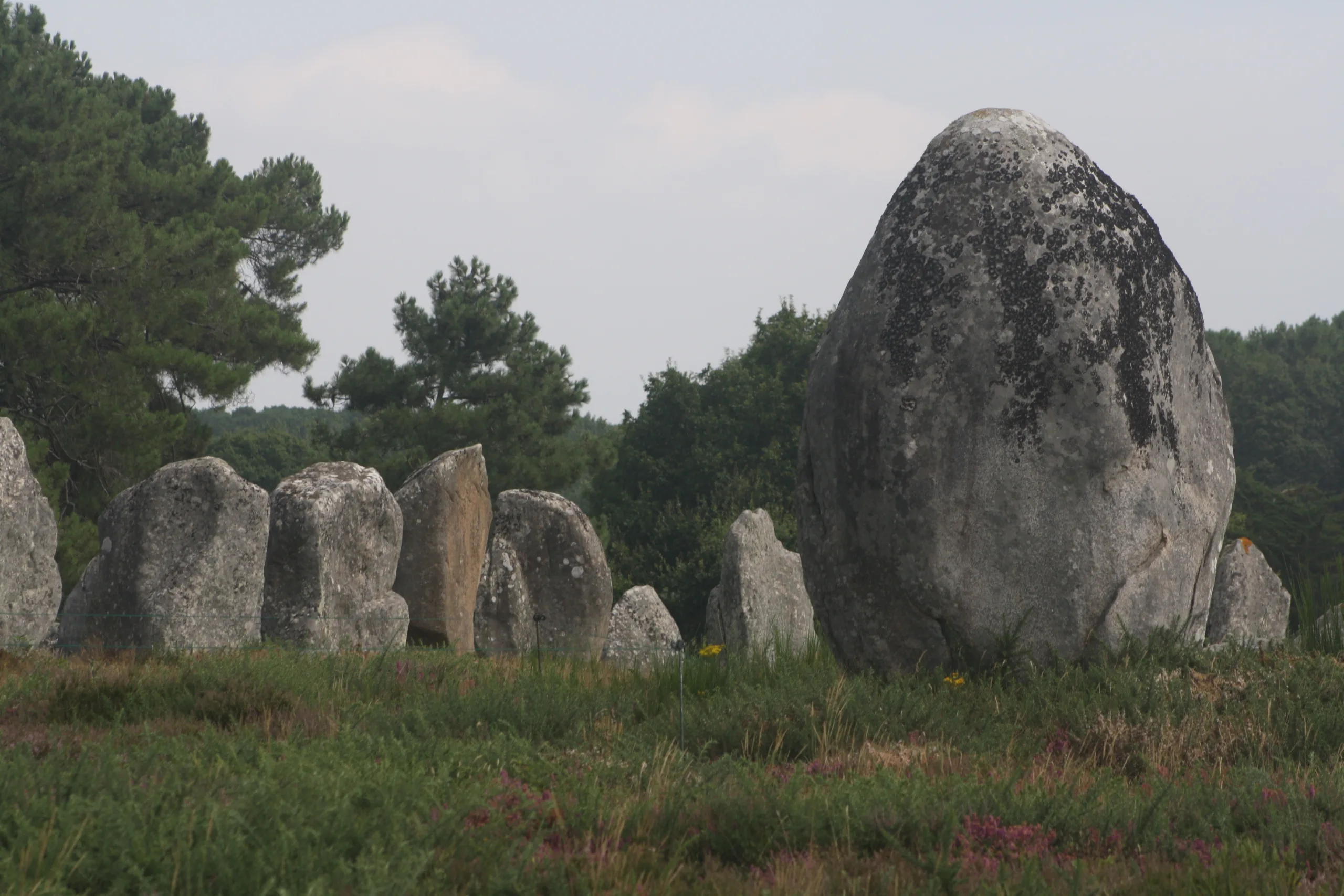
New radiocarbon evidence has placed parts of the Carnac megalithic complex among the oldest known monuments in Europe, predating other celebrated Neolithic sites, including Stonehenge and the temples of Malta.
The findings, published in Antiquity by the Franco‑Swedish NEOSEA project, indicate that key alignments at Le Plasker in Plouharnel were erected between 4600 and 4300 BCE. The research team, led by Dr Bettina Schulz Paulsson of the University of Gothenburg, analysed almost 50 charcoal samples recovered during rescue excavations on land designated for a business park. Bayesian modelling of these dates has provided what the authors describe as “unprecedented chronological precision”.
“With a sufficiently large dataset, even challenging soil conditions cannot prevent accurate dating,” Dr Schulz Paulsson said.
Beneath the alignments, archaeologists uncovered a monumental tomb built around 4700 BCE that overlies the remains of a Mesolithic hunter‑gatherer hut, indicating uninterrupted occupation of the Bay of Morbihan from the late hunter‑gatherer period into the early farming era. Domestic hearths, food waste and burnt stone suggest that ritual feasting accompanied funerary activity.
Carnac’s acidic soils usually destroy bone and other organic matter, so precise dating has long been elusive. The new methodology confirms the region as the probable birthplace of megalith construction in Europe and forces a revision of the continental timeline for Neolithic engineering and ceremonial practice.
While the purpose of Carnac’s more than 3,000 standing stones remains uncertain, hypotheses include territorial markers, processional avenues and astronomical alignments. Further study of sediments, stone tool fragments and hearth residues is expected to clarify the rituals that brought early communities together at the site.
With excavations continuing, scholars anticipate that the Carnac stones will yield further insights into the social and technological innovations of Europe’s first monument builders.