
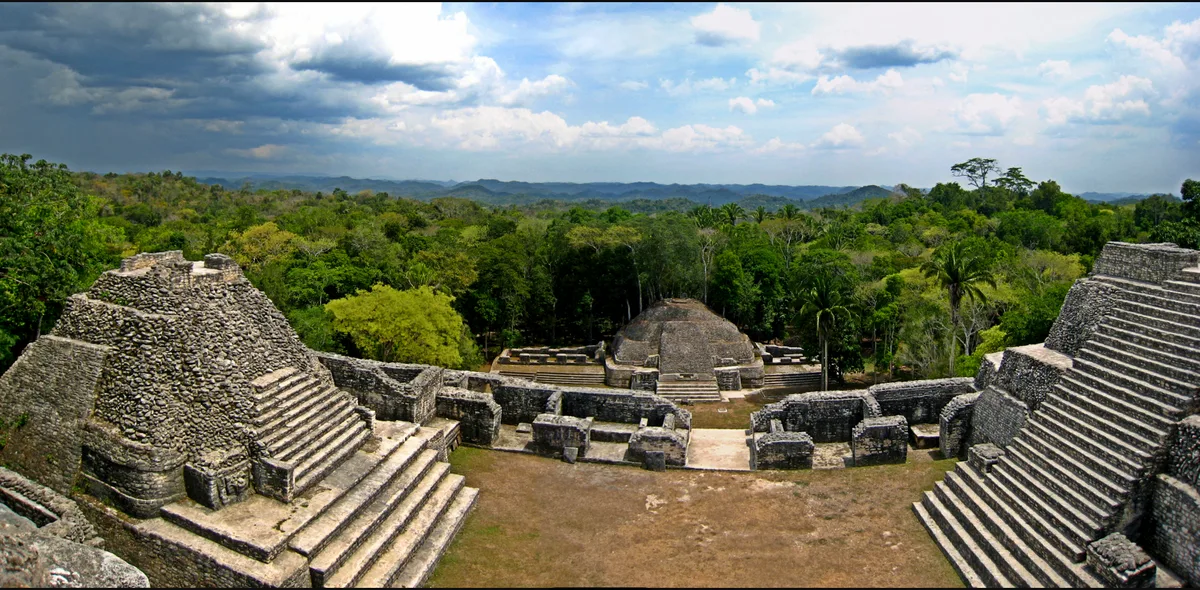
Archaeologists have uncovered the tomb of the first known ruler of the ancient Maya city of Caracol, marking a historic breakthrough in the understanding of one of Central America’s most powerful pre-Columbian civilisations.
The discovery was made by Dr Arlen and Dr Diane Chase, a husband-and-wife team from the University of Houston, who have spent more than 40 years excavating the site. Working in partnership with Belize’s Institute of Archaeology through the Caracol Archaeological Project, the pair unearthed the royal burial chamber of King Te K’ab Chaak, the founding monarch of Caracol’s royal dynasty.
The tomb was found within a monumental structure named Caana, meaning “Sky Place” in the Maya language, renowned for its towering height of 141 feet. Dr Diane Chase described the find as one of their most significant, stating, “We discovered the founding figure of the dynasty, which is immensely important in Caracol’s historical context. It’s remarkable that we were able to identify him as a ruler.”
She explained that although previous tombs containing high-status individuals had been excavated, this is the first to directly align with the hieroglyphic records as belonging to a dynastic ruler, and notably, the very first.
Caracol, which dates back to approximately 900 BC, flourished until the broader collapse of the Maya civilisation between AD 800 and 900. At its peak, it was one of the most dominant Maya cities and remains the largest archaeological Maya site in Belize.
Inside the tomb, archaeologists discovered an array of ornate and valuable artefacts, including intricately carved bones, ceramic vessels, seashells, jade beads, and elaborate jade mosaic death masks. One such mask depicted the king receiving ceremonial offerings, while others portrayed bound prisoners. A notable ceramic vessel featured an image of Ek Chuah, the Maya deity of commerce, surrounded by offerings.
Researchers estimate that the king, who stood around 5 feet 7 inches tall, was elderly at the time of his death, noting that he had lost all his teeth.
This tomb is the third royal burial discovered at Caracol, dating to around AD 350. A tomb unearthed in 2009 revealed the remains of a woman adorned with jewellery, shells, and pottery. Another burial yielded the cremated remains of three individuals, along with large ceremonial knives and objects believed to have originated from central Mexico.
The discovery is hailed as a significant contribution to the understanding of Maya political history and dynastic origins.