
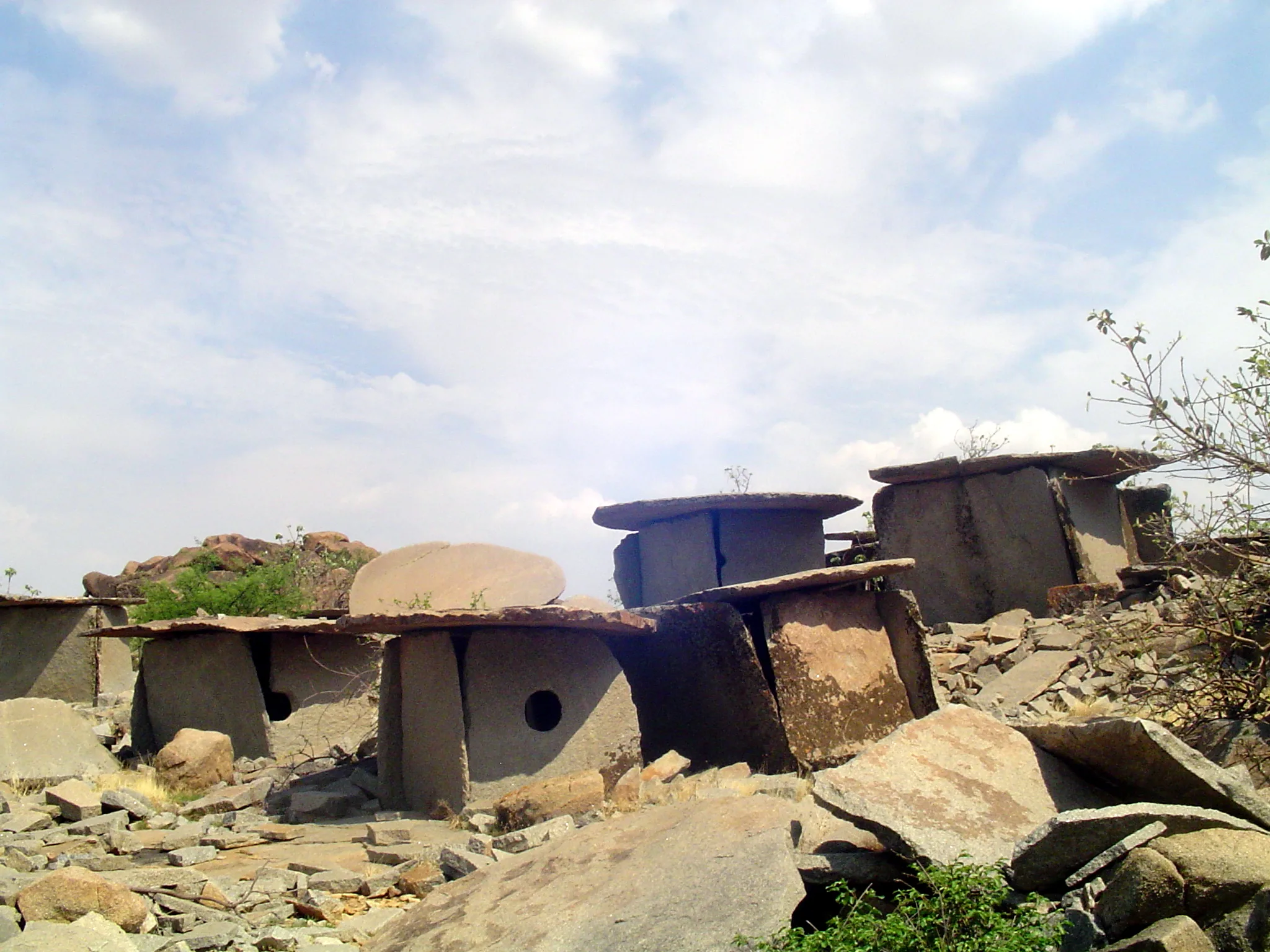
In the rocky hinterlands of Karnataka lies a remarkable yet little-known archaeological treasure, the megalithic necropolis of Hire Benakal. Spread across the granite-strewn hills of Moryar Gudda and aptly named the “Hill of the Dwarfs”, this site is home to nearly 1,000 ancient stone structures that date back over 2,500 years.
Locally referred to as the “Dwarf Chambers,” these prehistoric dolmens are among India’s largest and most well-preserved megalithic sites. Despite their historical significance, they remain largely outside the purview of both public awareness and institutional protection.
A Monumental Landscape
The landscape of Hire Benakal, situated in Karnataka’s Koppal district, is both dramatic and serene. Mango orchards, wild shrubland, and towering boulders frame a vast stretch of over 20 hectares, where these stone structures made of massive horizontal slabs resting upon vertical stones stand silently in rows. The dolmens are believed to have been built by Iron Age communities as burial or commemorative monuments. Some include circular portholes, stone circles, and multi-ton capstones, hinting at remarkable architectural sophistication.
Several of these structures are aligned along an east-west axis, suggesting potential astronomical or ritualistic significance. This orientation draws comparisons to monuments such as Stonehenge, where solar alignments play a central role in their interpretation.
Dr Srikumar Menon, a researcher at the National Institute of Advanced Studies, notes, “The design precision and sheer concentration of structures here suggest that Hire Benakal held sustained importance over several generations.”
The Myth of the Moriyars
Local legends attribute these structures to the Moriyars, a mythical race of diminutive yet powerful beings. They were believed to have perished in a celestial catastrophe, described as a ‘rain of fire.’ These tales, while not grounded in historical evidence, reflect a deep cultural memory. Similar folklore exists at nearby sites like Moribetta and Sanna Moriyara Thatte, reinforcing the enduring influence of oral traditions across the region.
“We know these monuments were built by humans,” says Dr Menon, “but such stories often preserve echoes of ancient practices and beliefs.”
A Site at Risk
Despite its unparalleled archaeological significance, Hire Benakal has not been granted protection by the Archaeological Survey of India and remains absent from the UNESCO World Heritage List, unlike the nearby heritage site of Hampi, which is just 42 kilometres away. The necropolis suffers from widespread neglect, with damage caused by cattle grazing, vegetation overgrowth, and vandalism. Illegal excavations by treasure seekers have further endangered the structures.
“People often destroy what they do not understand,” says Meera Iyer, convener at INTACH Bengaluru. “There is an urgent need for interpretation, education, and carefully managed tourism.”
Efforts are currently underway to include Hire Benakal on UNESCO’s Tentative List, a step that could unlock crucial international funding and raise public awareness. However, bureaucratic delays have hampered progress.
Tourism: A Lost Opportunity
Hire Benakal attracts just 20 to 100 visitors per month, predominantly between October and February. In contrast, the United Kingdom’s Stonehenge sees over a million tourists annually. Scholars and heritage advocates argue that sustainable tourism, coupled with conservation, could help protect the site while also contributing to the local economy.
“Even residents of Bengaluru are often unaware of its existence,” says archaeologist Disha Ahluwalia of MSU Baroda. “This is a rare example of Indian megalithic heritage that demands urgent preservation.”
For those seeking lesser-known destinations, Hire Benakal offers more than just historical intrigue. Its picturesque hiking trails, rich biodiversity, and tranquil surroundings make it an ideal site for eco-tourism—if developed responsibly.
With concerted conservation efforts, increased public engagement, and recognition from national and international bodies, Hire Benakal could emerge from obscurity to claim its rightful place among the world’s great archaeological sites.